
You must have an order with a minimum of $150.00 to place your order, your current order total is $0.00.
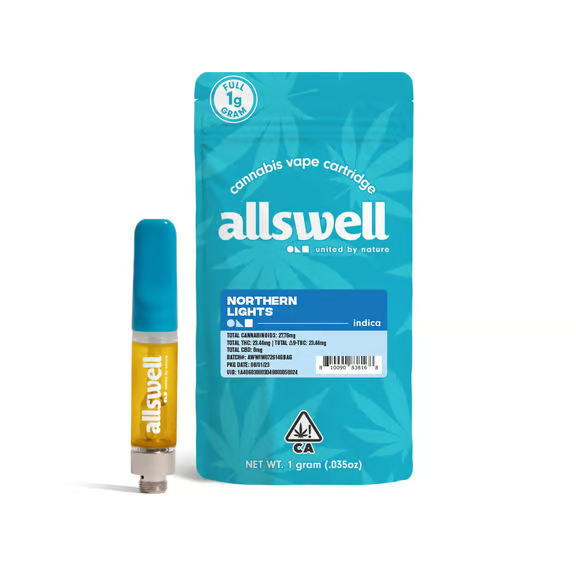
The Northern Lights, also known as the aurora borealis, is a stunning natural light display that occurs in high-latitude regions, primarily within the Arctic and Antarctic circles. This captivating phenomenon is caused by charged particles from the sun colliding with gases in Earth’s atmosphere.
Here’s some information about the Northern Lights:
- Cause: The aurora is a result of solar wind and solar flares releasing charged particles. These particles travel through space and, when they reach Earth, are guided by the planet’s magnetic field towards the poles.
- Atmospheric Collisions: As these charged particles enter Earth’s atmosphere, they collide with atoms and molecules of gases like oxygen and nitrogen. These collisions excite the atmospheric gases, causing them to emit light.
- Colors: The color of the aurora depends on the type of gas being excited and the altitude at which the collision occurs.
- Green is the most common color and is produced by oxygen atoms at lower altitudes (around 60-150 miles).
- Red is produced by oxygen atoms at higher altitudes (above 150 miles).
- Blue and purple are produced by nitrogen molecules.
- Shape and Movement: The aurora can appear in various forms, including arcs, curtains, rays, and diffuse glows. The shapes and intensity can change rapidly, creating a dynamic and mesmerizing display.
- Best Time and Place to See: The best time to see the Northern Lights is during the dark winter months (typically September to March) in locations with minimal light pollution and clear skies. High-latitude regions like Alaska, Canada, Iceland, Norway, Sweden, and Finland are prime viewing destinations.
- Solar Activity: The intensity and frequency of aurora displays are linked to solar activity. Periods of increased solar activity, such as solar flares and coronal mass ejections, can lead to more spectacular and widespread aurora events
Be the first to review “Northern Lights – 1g”
Related products
Sale!
Sale!
Sale!
Reviews
There are no reviews yet.